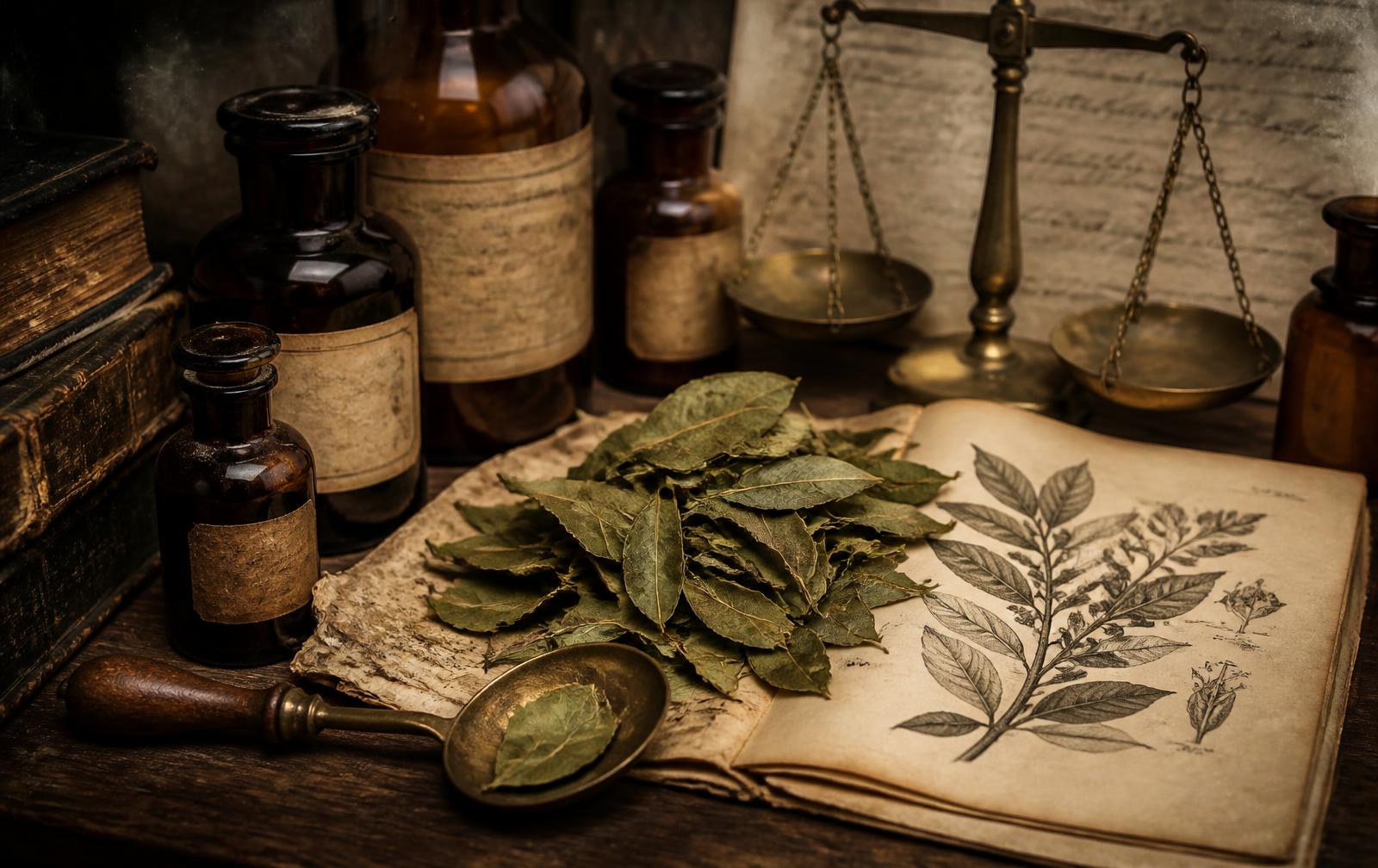
Nineteenth-century apothecary bench with amber bottles, dried coca leaves and a botanical engraving

An illustrated global history

Cocaine: four thousand years of a leaf, one century of a drug

How a sacred Andean crop became a European medicine, a soft-drink ingredient, a prohibited substance, and the engine of a violent global economy — told chronologically, with the arguments and the costs kept in view.

Two different histories, often told as one

Erythroxylum coca is a domesticated shrub with a documented place in Andean society for millennia. Cocaine is an alkaloid isolated from its leaves in a German laboratory in 1859. Nearly every dispute in this history — colonial taxation, medical enthusiasm, treaty law, eradication policy — turns on whether those two things are treated as the same substance.

0.5–1%
typical alkaloid content of a dried coca leaf
1859
the year cocaine was isolated and named
c. 20M
people estimated to use cocaine annually today
01 / c. 6000 BCE – 1550 CE

The Leaf

Long before cocaine existed as a chemical, the coca plant was a staple of Andean life — food, medicine, currency, and sacrament.

  1. c. 6000 BCE

    Coca enters the archaeological record

    Chewed coca leaves and lime residues appear at sites in coastal Peru and the Andean highlands, among the earliest evidence of sustained plant use in the Americas.

  2. c. 600–1000 CE

    Ritual and status

    Moche and Tiwanaku iconography depicts coca chewers and lime gourds. Leaf bundles accompany elite burials, marking coca as an offering to mountains and the dead.

  3. c. 1450

    An Inca state commodity

    The Inca administered coca plantations on the eastern slopes, distributing leaf through state channels for labour, ritual, and long-distance runners.

  4. 1569

    Spain taxes what it first condemned

    After early attempts to suppress coca as idolatry, colonial authorities discovered its usefulness in the silver mines of Potosí. Coca was legalised, taxed, and rationed to conscripted workers.

02 / 1855 – 1900

The Molecule

European chemistry pulled a single alkaloid out of the leaf, and nineteenth-century medicine and marketing did the rest.

  1. 1855–1859

    Isolation of the alkaloid

    Friedrich Gaedcke produced a crude extract; in 1859 Albert Niemann, working in Göttingen, purified and named cocaine, describing its numbing effect on the tongue.

  2. 1863

    Vin Mariani

    The Corsican chemist Angelo Mariani blended coca extract with Bordeaux wine. Endorsed by popes, monarchs, and Thomas Edison, it made coca a fashionable European tonic.

  3. 1884

    The first local anaesthetic

    Karl Koller demonstrated cocaine anaesthesia in eye surgery in Vienna — a genuine medical breakthrough that made painless ophthalmic and dental operations possible. Sigmund Freud's essay Über Coca appeared the same year, championing the drug before its dependence risks were understood.

  4. 1886

    Patent medicines and soft drinks

    Coca appeared in wines, lozenges, hay-fever powders, and John Pemberton's new Atlanta beverage. Cocaine was removed from Coca-Cola's formula around 1903; a de-cocainised leaf extract remains part of the flavouring.

  5. 1890s

    The backlash begins

    Physicians documented addiction, psychosis, and deaths among patients and colleagues. Medical journals that had promoted cocaine as a cure for morphine dependence began publishing warnings.

03 / 1900 – 1960

Prohibition

Within a generation cocaine moved from pharmacy shelf to controlled substance, in a wave of national laws and international treaties.

  1. 1906

    Pure Food and Drug Act

    US labelling requirements forced patent-medicine makers to disclose cocaine content, collapsing much of the market.

  2. 1912

    The Hague Opium Convention

    The first international drug treaty extended controls beyond opium to cocaine, committing signatories to restrict manufacture and trade.

  3. 1914

    Harrison Narcotics Tax Act

    The United States restricted cocaine to medical use. Enforcement was entangled from the start with racialised press campaigns that used the drug as a pretext for policing Black communities in the South.

  4. 1920s–1950s

    A quiet interval

    Legal manufacture concentrated in a few licensed firms; illicit use receded in much of the West as amphetamines took its place. Andean leaf chewing continued, increasingly framed by outsiders as a problem to be eradicated.

04 / 1961 – 1999

The Trade

A global prohibition regime met surging demand, and the result was one of the most profitable and violent illicit industries of the century.

  1. 1961

    UN Single Convention

    Coca leaf itself was listed alongside cocaine, obliging producer states to uproot cultivation — a clause Bolivia and Peru have contested ever since on cultural grounds.

  2. 1970s

    Andean boom

    Cultivation expanded in Peru's Upper Huallaga and Bolivia's Chapare, with processing and export organised through Colombia. Cocaine re-entered North American nightlife as a luxury good.

  3. 1976–1993

    Cartels and counter-state violence

    The Medellín and Cali organisations industrialised smuggling and waged war on the Colombian state — assassinations of judges, journalists, and a presidential candidate. Pablo Escobar was killed in 1993; the Cali leadership fell soon after.

  4. 1984–1990

    Crack and the sentencing gap

    Smokable cocaine spread through under-invested US cities amid a price collapse. The 1986 Anti-Drug Abuse Act imposed penalties for crack 100 times harsher than for powder, a disparity narrowed only in 2010.

  5. 1980s–1990s

    Cold War entanglements

    Congressional investigations, including the 1989 Kerry Committee report, documented how counter-insurgency alliances in Central America repeatedly overlapped with trafficking networks.

05 / 2000 – today

The Present

Eradication campaigns reshaped routes and actors more than volumes. Production is now at record highs and markets have gone global.

  1. 2000

    Plan Colombia

    A multi-billion-dollar US aid programme funded aerial fumigation and military support. Cultivation shifted between regions and countries — the 'balloon effect' — rather than disappearing.

  2. 2006–2015

    Mexico's corridor wars

    As Caribbean routes closed, Mexican organisations took control of wholesale distribution into the US, and a militarised crackdown drove more than a decade of extreme violence.

  3. 2009 / 2013

    Coca's legal status revisited

    Bolivia expelled the DEA and later re-acceded to the UN convention with a reservation permitting traditional coca chewing, formalising a distinction between leaf and alkaloid.

  4. 2016

    Peace accord, rising hectares

    Colombia's agreement with the FARC included voluntary crop substitution, but cultivation reached new peaks as armed successor groups and dissidents filled the vacuum.

  5. 2020s

    Record supply, new markets

    UNODC reporting describes successive all-time highs in coca cultivation and cocaine manufacture, with rapid market growth in Western Europe, Brazil, West Africa, and Asia, and Antwerp and Rotterdam emerging as principal entry ports.

Printed edition

Take the whole history home in paperback

Every copy is printed to order after you buy it, then shipped to you — no warehouse, no remainders.

Loading the edition…

Throughlines

What the chronology keeps repeating

Leaf is not powder

A traditional coca quid delivers a mild, slow dose comparable to strong coffee. Cocaine hydrochloride concentrates the alkaloid hundreds of times over. Conflating the two is the oldest confusion in this history — and the one that made a 4,000-year-old crop illegal under international law.

Medicine invented the market

Cocaine was not smuggled into the world; it was launched by chemists, physicians, and advertisers. Its descendants — lidocaine, procaine, and the wider '-caine' family — remain in daily clinical use, which is why the drug still holds a legal medical schedule.

Prohibition redraws the map

Every major enforcement success has relocated the industry rather than ended it: from Peru to Colombia, from the Caribbean to Mexico, from Miami to Antwerp. Supply has proven far more elastic than demand.

The cost is not evenly shared

Consumption is concentrated in wealthy countries; homicide, displacement, deforestation, and incarceration fall overwhelmingly on Andean growers, transit communities, and over-policed neighbourhoods far from the point of sale.

Further reading

Sources

  • Paul Gootenberg, Andean Cocaine: The Making of a Global Drug (2008)
  • Joseph Spillane, Cocaine: From Medical Marvel to Modern Menace (2000)
  • Dominic Streatfeild, Cocaine: An Unauthorized Biography (2001)
  • UNODC, World Drug Report (annual) and Colombia Coca Cultivation Surveys
  • Insight Crime and the Transnational Institute, regional trafficking and drug-policy reporting